

Key Highlights
- Scoliosis is a problem where the spine is curved in a way that is not normal. It does not just hurt your back. It can also cause problems for your digestive system.
- When the spine turns or twists, it can press on the internal organs. This may lead to problems like acid reflux.
- Studies show there is a link between scoliosis and a higher risk of having GERD symptoms.
- Postural changes because of scoliosis can change how the stomach and esophagus work.
- Taking care of scoliosis with certain exercises and some lifestyle changes may help with stomach discomfort.
- To feel better, it is important to know about how your spine is connected to your gut and digestive system. This is a good first step toward relief.

Introduction
Have you ever thought if your scoliosis has something to do with your acid reflux? A lot of people ask the same thing. Scoliosis does not just affect your back. It can also change how other parts of your body work, like the digestive system. Some people who have scoliosis get digestive issues as well. They might think there is a link between the two. This article looks at the not-so-obvious connection between scoliosis and acid reflux, showing how your spine’s health can change your gut health.
Understanding Scoliosis and Its Impact on the Digestive System
Scoliosis happens when the spine curves to the side, making an “S” or “C” shape. A healthy spine should look straight when you look at it from the back. With scoliosis, the spine looks curved in a way it should not. If the curve is more than 10 degrees, the doctor will call it scoliosis. The most common kind is idiopathic scoliosis, and this type often starts when kids are in their teen years.
Scoliosis does not just change the way you stand or sit. It can also press or move your internal organs. When the curve is in the upper or middle back, it can push against the stomach and the esophagus. This makes less room in the abdomen, which can affect digestion. Sometimes, this pressure makes acid from the stomach go back up into the esophagus. This is known as acid reflux.
The spine helps hold up your torso. It also keeps the rib cage and big digestive organs in place. But when someone gets scoliosis, it changes the shape of the spine. This can change how the digestive organs sit and work in your body. Because of that, there may be more risks for digestive issues like acid reflux.
Can Scoliosis Directly Cause Acid Reflux or GERD?
It might be surprising, but people now know more about how scoliosis can lead to acid reflux. Acid reflux is also called gastroesophageal reflux disease, or GERD. Scoliosis does not always cause GERD. Still, changes in the spinal alignment from scoliosis can be a big reason for this problem. When the spine is not straight, it can start other issues in the body. These can end up giving you several digestive symptoms.
The main connection here is through how the body works. When the spine is curved, it can take space away from the chest and belly. This compression can put pressure on the stomach and the lower part of the esophagus. If the stomach is squeezed, it can push up what is inside, like stomach acid. This is what leads to acid reflux. Soon, we will look at how this pressure can change the way the stomach works.

How Spinal Curvature May Influence Stomach Function
The way the spine twists and curves with scoliosis can press down on the stomach because of this compression. When this happens, the stomach and other digestive organs feel the squeeze. This can move them out of place. It may also make it hard for them to do their job in the way they should.
This compression can put stress on the lower esophageal sphincter. The lower esophageal sphincter is a muscle that keeps the esophagus and the stomach apart. It should stay tightly closed. This stops stomach acid from moving back up. But, a spinal curve from scoliosis can put pressure on that muscle. This can make the lower esophageal sphincter weak or not work right. A diaphragm that is out of line because of scoliosis can also hurt the function of the lower esophageal sphincter.
When the LES does not close the right way, acid from the stomach can go back up into the esophagus. This can bring a burning feeling that people call heartburn. Heartburn is a main sign of acid reflux. When this keeps happening, the pressure and poor digestion can cause lasting problems like GERD.
What the Science Says: Insights from Recent Research
You may want to know if there is real science to show a link between scoliosis and GERD. The answer is yes. New studies now lay out proof for this. The research gives data that back what many people with scoliosis feel with GERD.
Studies show that scoliosis can be one of the risk factors for getting GERD. This research shows how a problem with your spine can affect the digestive tract in the body. Let us look at a study that checked this connection between scoliosis and GERD, and see what other findings there are about these two.
Summary of the 2021 Study Linking Scoliosis to GERD
A major study from 2021 was published in the journal Clinical Spine Surgery. It gives clear medical proof that there is a link between scoliosis and GERD. The researchers looked at data to find out if adults who are scoliosis patients get GERD and hiatal hernias more often. A hiatal hernia happens when part of the stomach moves up into the chest through the diaphragm.
The study used multivariate logistic regression analyses to check the differences between patient groups. The results were clear. People with adult scoliosis have a much higher chance of getting both GERD and hiatal hernia. This was compared to one group of people who do not have scoliosis. The spinal deformity seems to be a risk factor for these health problems. The study, The Prevalence of Gastroesophageal Reflux Disease and Hiatal Hernia in Adult Scoliosis and Their Impact on Health-Related Quality of Life, points out an important link between scoliosis, GERD, and how people feel about their own quality of life.
Here is a simple breakdown of the findings:
| Patient Group | Increased Risk Found |
| Adult Scoliosis | Greater risk of both hiatal hernia and GERD |
| Control Group | Lower risk compared to the scoliosis group |

Other Significant Studies and Their Findings
Many studies since 2021 have shown there is a link between spinal deformity and GERD symptoms. Doctors have talked about this for years, but now there are studies that back up what they have seen. Some of this research looks at certain types of scoliosis and how these might affect GERD.
For example, some studies show that people who have lumbar scoliosis, which is a curve in the lower spine, often have digestive issues. They experience things like constipation and stomach pain. This finding is not exactly about GERD, but it does suggest that curves in different parts of the spine can affect the nearby digestive organs. This also shows that compression of the organs in the body can be an important reason for these problems.
Research into adolescent idiopathic scoliosis has sometimes seen that people with this condition may have stomach and digestive troubles. Most of the time, doctors pay attention to the spinal curve, but there is now more talk about how important it is to look after the patient’s total health, including the belly and how it works. These studies show that scoliosis and idiopathic scoliosis can have effects on the whole body, not just the back.
Exploring “Gut Feelings”: Book Insights by Dr. Clayton J. Stitzel
To learn more about how these two are connected, we can look at what experts have to say. Dr. Clayton J. Stitzel, who is also called The Scoliosis Doctor, talks about how scoliosis and stomach problems can be linked. He covers this in his book, “Gut Feelings: The Overlooked Link Between Scoliosis and Digestive Distress.“
The book shows how posture changes from scoliosis can affect your internal organs and the whole digestive tract. It says that treating digestive symptoms alone may not work if scoliosis is the reason behind them. Let’s look at some important ideas from this book.
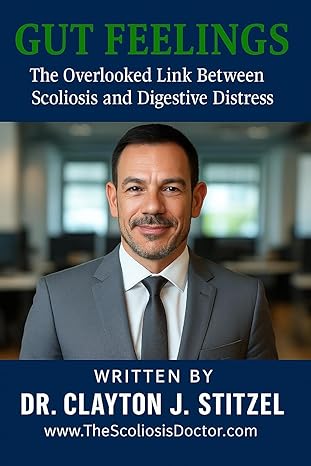
Discover hope, science, and real solutions—explore The Scoliosis Doctor series on Amazon and start transforming your scoliosis journey today! Download the Kindle app on your mobile device for free! Get it for iPhone. Get it for Android.
In his book, Dr. Clayton J. Stitzel says that most doctors do not see how scoliosis and digestive symptoms can be linked. He notes that when the torso twists from scoliosis, it starts a domino effect. This can mess up the whole digestive process.
The book shares some points that patients need to know. One main idea is that mechanical compression is not just uncomfortable. It can cause bigger problems. For example, compression on the organs can lead to poor digestion. This poor digestion can stop your body from getting the essential nutrients it needs. This can affect your health in many ways.
Here are some core ideas from the book:
- When you have scoliosis, the way your body shifts can harm the function of the lower esophageal sphincter. This lets acid come up from the stomach and causes acid reflux.
- A spinal curve can squeeze the stomach. This makes you feel full even when you have not eaten enough, and can stop your body from getting the food it needs.
- Scoliosis can mess with the nerves that help with digestion. Because of this, you can get problems like constipation or feel like you have IBS.
- Fixing the spinal curve is important. It is the best way to help stop these digestion problems from coming back again and again.
Real-Life Stories and the ScoliSMART Approach
Real-life stories show us the best proof. A lot of people who have gone through scoliosis treatment with the ScoliSMART way say they feel much better. Many notice their digestive health is better and acid reflux is not as bad. This tells us that fixing the spinal curve with scoliosis treatment can help reduce acid reflux.
The ScoliSMART approach is a way to treat scoliosis that does not use surgery or other hard methods. It is a scoliosis treatment that looks at more than just the spinal curve. The program uses special exercises, changes you can make in your daily life, and nutrition to help with the effects of scoliosis on the whole body. This plan aims to lower the spinal curve and also help people feel and move better in their daily activities. With ScoliSMART, you may notice a boost in your quality of life.
By using the ScoliSMART Activity Suit and working to retrain muscles, people can help fix their spinal alignment. This can take pressure off the digestive organs. Many people have said that this helps with acid reflux and other digestive issues. It shows that treating scoliosis can help in many ways.
Managing Acid Reflux in Patients with Scoliosis
If you have scoliosis and deal with acid reflux, you can take steps to feel better. To get relief, first work on the acid reflux symptoms. Next, manage the scoliosis.
Start with simple changes in the way you live. Change your diet by staying away from spicy and fatty foods. This can help lower heartburn. Eat smaller meals more often to keep stomach pressure down. Try to sit up straight when you eat. Good posture helps your digestion.
Additional tips include:
- Eat smaller meals several times a day.
- Do not lie down for at least 2 to 3 hours after you eat.
- Add high-fiber foods to your diet. It will help with digestion.
- Drink water between meals to stay hydrated.
- Try gentle stretching or yoga. It can help you improve your posture.
The right habits every day can help your back feel better. They also make it easier for you to feel good in your stomach.
If you have scoliosis and often feel digestive symptoms like GERD, think about seeing a specialist. The spinal curve can cause compression that may lead to these problems. Making changes in your life can help, but it might not be enough if the compression from scoliosis is serious. A specialist will be able to tell how severe the issue is.
You should get help from a doctor if you have acid reflux that will not go away, or if you try medicine but it does not help. If you feel trouble when you swallow or you lose weight and do not know why, these signs may show strong compression on your digestive organs.
A specialist who knows about the link between scoliosis and digestive issues, like the team at ScoliSMART, can look at your condition as a whole. They will check your spinal curve to see how it may be affecting your internal organs. After that, they can put together a focused scoliosis treatment plan to help with the real reason you are having digestive symptoms.

Click on the Scoli-Fact to see the rest of the Scoliosis Facts!
Frequently Asked Questions (FAQs)
Scoliosis often makes people ask a lot of questions about its link to digestive issues. Research shows that spinal deformities can sometimes press on the internal organs and lower esophageal sphincter. This may lead to signs of gastroesophageal reflux disease, or GERD. You can read more in the study here.
You can also read more about how scoliosis and digestive health are connected in “Gut Feelings: The Overlooked Link Between Scoliosis and Digestive Distress” by Clayton J. Stitzel. Learn more about how scoliosis treatment relates to your gut health here.
Are adults with scoliosis more likely to have GERD?
Yes, research shows that people who have scoliosis may be more likely to get GERD than others. Over time, the effects of spinal disorders can cause more compression on the digestive organs. This can make acid reflux worse. It can also lower quality of life, because people may feel chronic acid reflux symptoms.

Can the ScoliSMART approach help reduce acid reflux symptoms?
Yes, the ScoliSMART approach can help with acid reflux. This scoliosis treatment does not use surgery. It works on spinal alignment and improves posture. With better posture, there is less compression on the organs. This can take away some of the pressure that causes GERD symptoms. So, ScoliSMART helps get to the main reason behind acid reflux for real relief.
What are the most common digestive symptoms linked to scoliosis?
The most common digestive symptoms that come with scoliosis include acid reflux, which people also call heartburn. Other signs are constipation, bloating, and getting full fast when you eat. These problems usually show up because the spine puts extra pressure, or compression, on the internal organs. The stomach and intestines can feel this squeeze. This pressure leads to interference and keeps them from working the way they should.
Conclusion
To sum up, scoliosis can affect your digestive health more than you may think. It may be linked to acid reflux and GERD. A study from 2021 points out some key links. It shows that the curve in the spine can impact the stomach and make digestive issues worse.
Dr. Clayton J. Stitzel’s book, “Gut Feelings: The Overlooked Link Between Scoliosis and Digestive Distress,” also talks about how scoliosis and gut health are connected. The author shares good advice and real-life stories for people to read and use in their lives.
Knowing about these links will help people manage digestive issues better. It can make your quality of life better, too. If you have acid reflux, GERD, or any other symptoms, you should talk to a specialist. They can help find the best way for you to feel good again.


