

Key Highlights
- Scoliosis is not just found in teens. The condition can happen at any time in life, from when a person is a baby to when they are an adult.
- The most common type is called adolescent idiopathic scoliosis. Still, adult scoliosis is also seen a lot, and often this starts because of growing older.
- The symptoms of scoliosis can change based on a person’s age. Adults with scoliosis often feel pain, but teens usually do not.
- It is important to have early detection of spinal curvature at every age so people can manage the problem the right way.
- There are many treatment options for scoliosis, such as physical therapy and several specialized programs, that can help manage it through the year.

Introduction
When you hear someone mention scoliosis, you may think of a teenager with a back brace. But this spinal condition is not just a problem for teens. Scoliosis means there is a sideways curvature of the spine. The truth is, it can show up in anyone. Babies, kids, and older adults can get it too. The path of scoliosis is not the same for everyone. It can start at different stages in life. In this article, you will read about how this condition can show up and change as people get older.
Understanding Scoliosis – More Than Just a Teen Condition
Many people think that scoliosis is something that only happens to teenagers. But this is not true. This spinal condition can show up when a child is young, and it can also start when someone is an adult. There are a few types of scoliosis. A lot of the time, nobody knows why it starts. When the reason is not clear, doctors call it idiopathic scoliosis.
A spine specialist can find out if you have scoliosis with a physical examination and imaging. It’s important to know that scoliosis can happen to people in all age groups. This will help you take better care of your spinal health. Let’s talk more about what scoliosis is. We will clear up the idea that only teens get it.

What Is Scoliosis and How Does It Affect the Spine?
Scoliosis is when the spine bends to one side. It makes the spine look like an “S” or “C” instead of a straight line. This sideways bend is one of the most common spinal deformities. The curve can happen anywhere on the spine, but many people get it in the upper or lower back.
Some people have scoliosis and might not know it. Others may see clear symptoms of scoliosis. You might notice uneven shoulders or hips. As the curve grows worse, it can cause discomfort or bigger health problems.
This form of scoliosis can change how the body lines up and how a person keeps balance. Some people feel pain when they have it, especially adults who get a form that happens as they get older. The pain and nerve problems come from it. How the spine is hurt depends on how deep the curve is and how old the person is.
Dispelling the Myth: Is Scoliosis Only Seen in Teenagers?
Many people think that scoliosis is just a problem for teens, but that is not true. Adolescent idiopathic scoliosis is the type people hear about most. But scoliosis can be found in young children, too. It can also show up for the first time when people are adults. So, this condition is not only in one age group.
Adult scoliosis is real for many people. It often shows up later in life because the spine wears down with age. So, an adult can get a scoliosis diagnosis even if their back was straight in their teen years. There are different types of scoliosis. Each one can show up at a different time in life.
This is why early detection matters so much at any age. If you are a parent looking at your child’s posture, or if you feel new back pain as an adult, you need to watch for the signs. Being aware can help you get a diagnosis sooner. Early help can make the condition easier to manage.

Scoliosis Through the Ages: How the Condition Evolves
Scoliosis shows up in different ways based on the age a person gets it. The journey with this condition is not the same for everyone. It can feel very different for young children and for older adults. The types of scoliosis and how much the curve progression might happen can both change a lot during a person’s life.
Childhood scoliosis has unique signs that set it apart from other types. On the other hand, adolescent idiopathic scoliosis is tied to growth spurts during teenage years. Adult scoliosis usually starts because of degenerative changes that happen with age. Knowing the difference between childhood scoliosis, adolescent idiopathic scoliosis, and adult scoliosis helps to manage the condition better at each stage.
Childhood Scoliosis: Early-Onset and Its Unique Features
Scoliosis can show up in young kids. This is called childhood scoliosis, or early-onset scoliosis. It happens before kids turn 10. This kind has its own features. It is not the same as scoliosis that kids get when they are older. Sometimes, childhood scoliosis has a clear cause.
There are a few kinds of curve of the spine seen in children. It is important to have early detection because kids’ spines are still growing. If the curve of the spine is not watched or treated, it can get worse fast. The signs may not be easy to spot, so going for regular check-ups is a good idea.
- Congenital scoliosis: This type is there from birth. It happens when the bones in the back do not form the right way.
- Neuromuscular scoliosis: This is caused by conditions like cerebral palsy or muscular dystrophy.
- Idiopathic scoliosis: The reason for this is not known. It is like the type seen in teens, but it starts sooner.
If you see that your child has uneven shoulders or a tilted way of standing, it may be a sign to go to a specialist. It is good to check early, so they can tell you what is going on or find out what the problem is.
Adolescent Idiopathic Scoliosis: Why Teens Are Often Diagnosed
Adolescent idiopathic scoliosis is the most common type of scoliosis. It is usually found in kids and teens who are 10 to 18 years old. It often starts during the teen years because people grow fast at this time. A small curve in the back can get worse quickly during these growth spurts. This is why this type of scoliosis is seen a lot in teens.
The word “idiopathic” means that the doctors do not know the exact cause. Still, they think genetics may have something to do with it. A person may not feel any pain when it starts, so they may not notice it right away. A physical examination by a pediatrician or a school nurse can help find it. This is when they may see signs like uneven shoulders or a rib sticking out when the child bends forward.
This is why it is so important for people in this age group to get checked on a regular basis. Finding the curve early lets you get ahead of it and start the right steps. This can help to stop the curve from getting worse. Both boys and girls can be told they have this, but girls are more likely to get curves that need treatment.

Click on the Scoli-Fact to see the rest of the Scoliosis Facts!
Adult Scoliosis: Late-Onset and Aging-Related Changes
Scoliosis is not always something that starts in childhood. It can start when you are an adult. This type is called adult scoliosis or de novo scoliosis. It happens because of the aging process. Over time, the spinal discs and joints go through wear and tear. This kind of scoliosis is also called degenerative scoliosis.
Unlike teenagers, adults often feel the back pain from scoliosis. Adults can have lower back pain that does not go away, feel stiff, and have pain from nerves that goes down the legs. This happens because the spinal curvature can put pressure on nerves and tissues nearby, causing lower back pain and other problems.
The curve progression in adults often gets worse more slowly than in young people. But it can still get worse as time goes on. This may make there be a change in posture. It can also make a person lose some height. When it comes to adult scoliosis, the goal is to lower pain and help people move better. This helps keep a good quality of life.
Causes of Scoliosis Across Different Life Stages
The causes of scoliosis vary by age. In most teenagers, the cause is idiopathic, meaning it’s unknown. Family history can increase risk at any age. In young children, scoliosis may result from birth defects (congenital scoliosis) or neuromuscular conditions like cerebral palsy or spina bifida. In older adults, degenerative spine changes are often responsible.
Knowing the type and cause helps doctors choose the best treatment. The main types include:
- Adolescent Idiopathic Scoliosis: Most common in teens; cause is unknown but may run in families.
- Congenital Scoliosis: Present at birth due to improperly formed vertebrae.
- Neuromuscular Scoliosis: Caused by nerve or muscle disorders.
Most teen cases are not linked to injury or illness and usually appear during puberty’s growth spurt. Identifying the type of scoliosis is important for proper care.
Causes in Adults
When people get degenerative scoliosis in adulthood, it often happens because of changes in the body. This type of scoliosis is common as people get older. Over time, the discs in the back that sit between the bones can start to break down. They might get smaller and not work as well. When this happens, the spine can lose its support and begin to bend.
These degenerative changes often show up in the lower back. This can cause a new curve of the spine, even in people who once had a straight back when they were young. Things like osteoporosis make the bones weak. This lets them break down or change shape more easily and leads to these problems.
In some cases, adult scoliosis can be the same scoliosis that started when you were younger. It might be that it was not found or treated before. As time goes on, the curve in the back may get worse and start to bring problems. A spine specialist can check your back in detail and do imaging tests to find out why it is happening.
Rare Types and Syndromic Scoliosis
There are some rare types of scoliosis that you do not see as often. These usually happen because a person has another medical problem. Syndromic scoliosis is one of these rare forms. It shows up when someone has a bigger health problem that can change many parts of the body. Some examples are Marfan syndrome and Ehlers-Danlos syndrome.
Neuromuscular scoliosis is another type that you should know about. This kind happens when there are problems with the nerves and the muscles. These parts are very important to help keep the spine straight. If the muscles do not work right, the spine can start to bend and form a big curve.
Conditions like cerebral palsy, muscular dystrophy, and spina bifida can cause neuromuscular scoliosis. These types of scoliosis often get worse faster than idiopathic scoliosis. People with these health problems usually need more help to manage their scoliosis.
Recognizing Scoliosis: Key Signs to Watch for
Knowing the symptoms of scoliosis helps with early detection. Often, the signs can be hard to see, especially at first. Common symptoms of scoliosis include uneven shoulders, one shoulder blade that sticks out, or an uneven waistline. Be sure to look for these changes in posture.
Some signs can show up at any age, but the main symptoms can be different in children, teens, and adults. For adults, pain in the lower back is common. You rarely see this in young people. A physical examination can let you know if there is a spinal curve.
The symptoms of scoliosis in children and teens show up mostly in how the body looks. It is usually not painful. Since they are still growing, the signs can be easier to see during growth spurts. Parents may be the ones who first notice that there is something different about their child’s posture.
The diagnosis of scoliosis in young people often happens when these changes in the body are seen. It is important to watch out for these signs. Early help can make curve progression better to manage.
- Uneven shoulders. One is higher than the other.
- One shoulder blade sticks out more than the other.
- The waist looks uneven, or one hip is higher.
- A “rib hump” is seen on one side of the back when you bend forward.
You may notice these signs if someone has uneven shoulders.
Because pain does not show up often in this age group, these changes you can see are the best way to know if your child needs a spine check-up.

How Scoliosis Symptoms Differ in Adults
Unlike younger people, adults with scoliosis usually feel pain first. They often feel back pain in their lower back. The pain can feel like a dull ache, or it can be sharp and hard to handle. This is seen mostly in those with degenerative scoliosis.
As the spinal curve gets worse in adults, it can bring more problems. When the spine twists and bends, the spinal canal can get smaller. This is called spinal stenosis. It can push on nerves. You may feel pain run down your legs, feel numb, or get weak in your legs. Over time, some adults may see they lose height or their posture changes.
Younger people often show visible changes in their posture, but they may not feel pain. On the other hand, many adults feel pain and look for help as it can make everyday life harder. Adult scoliosis is common. Some studies say about 68% of people over 60 have some kind of spinal curvature.
How Scoliosis Is Diagnosed at Different Ages
The process for a scoliosis diagnosis is mostly the same for people of any age. The timing and focus can change based on the person. A scoliosis diagnosis often begins with the spine specialist looking at your medical history. After this, you will have a physical examination. The specialist will check for any differences or changes in your back during the exam.
If the doctor thinks you might have scoliosis, the first step is to use imaging tests. These tests help check for scoliosis and show how much the spine is curved. Most of the time, X-rays are used. But sometimes the doctor will ask for a magnetic resonance or CT scan. This helps them see the spine and nerves in more detail, which can be important for adults.
Scoliosis is often found during the adolescent years, usually when people are between 10 and 15 years old. This is the time when puberty starts, and many have growth spurts. Because of this rapid growth, a small curve of the spine can become easier to see. School checks and yearly visits with a pediatrician are important for early detection of scoliosis.
The usual way to check for scoliosis is called the Adam’s Forward Bend Test. In this physical examination, the person bends at the waist. A doctor looks at the back to see if there is any uneven shape, like a rise in the ribs. If this test shows something is not right, then the doctor will ask for an X-ray to make sure about the scoliosis diagnosis and find out how bad the curve is.
There are different types of scoliosis. These forms of scoliosis often show up at different times in life. Early detection is important for people with scoliosis. It lets you get the best care and treatment at the right time.
| Life Stage | Common Age of Detection | Typical Method of Detection |
| Infancy/Childhood | Birth to 10 years | Well-baby check-ups, parental observation |
| Adolescence | 10 to 18 years | School screenings, annual physicals, Adam’s test |
| Adulthood | 40+ years | Seeking care for back pain, imaging for other issues |
Importance of Early Screening at All Life Stages
Early screening for scoliosis is very important. It is not just kids or teenagers who need to get checked. When you find scoliosis early, at any age, you get more treatment options that work better and are easier on the body. This can also help people feel better in the long run. If young kids get checked early for scoliosis, doctors can catch it fast and stop it from turning into worse size or shape problems.
When the doctors find a curve in young people early, they can start treatments before it gets worse. This can stop the curve from getting bad when kids are growing fast. For grown-ups, early detection can help with pain and stop the curve from getting worse because of degenerative changes. This helps people keep their mobility and keep a good quality of life.
People who have a family history of scoliosis have a higher risk for it. They should be more careful and watch for signs. A physical examination is a simple way to start checking for this. Early screening helps us make sure that anyone with scoliosis can get the right care at the right time. This can be true for people of any age.
ScoliSMART Approach: Personalized Care for Every Age
Managing scoliosis is different for each person. This is why it is important to have a personalized plan that works for you. The ScoliSMART approach gives you treatment plans made for your age, how serious your curve is, and what you want from life. With this approach, the goal is not to just watch the problem, but to take action and help you now.
We use special exercises and new tools to help keep the spine steady. This is all done to boost the quality of life for people. The treatment options we choose are aimed at each person’s needs. The goal is to help patients at any age handle their condition and stay active in their lives. We will show how these ways to help are changed for children, teens, and adults.

Active Treatment Strategies for Growing Children
For kids who have early-onset scoliosis, it’s important to act early. The main thing to do is manage curve progression while they are still growing. Before a child reaches skeletal maturity, there is a better chance to guide the growth and alignment of the spine.
Active treatment options work to fix the main cause of the instability. These options are not like the old “watch and wait” method. The goal is to help retrain the brain and muscles so that they can give better support to the spine. Physical therapy and special exercises are a big part of these treatment options.
Some effective strategies include:
- Early exercises can help with posture and keep your muscles in balance.
- You can get advice on food to help your bones and muscles grow strong and healthy.
- There are tools like the ScoliSMART Activity Suit that help your muscles learn new movements. This can also help lower the curve.
If you step in early, you can slow down or stop curve progression. This can also cut down the need for big treatments later on.
Managing Scoliosis in Teens and Young Adults
When handling adolescent idiopathic scoliosis, the main goal is to keep the curve from getting worse during times of rapid growth. This is the point when the spine can get worse the most. The ScoliSMART treatment options for teens do more than just use braces. They give teens a more active and interesting way to deal with idiopathic scoliosis.
The goal is to help teens and young adults feel confident about their care. It is good for them to play an active part. This happens by doing a mix of at-home scoliosis exercises and in-office care. These steps help the body learn better movement. They help steady the spine and sometimes even lower the curve.
These treatments help the body learn how to fix the posture by itself, not just keep the spine in place. This helps people feel better and move better. Teens can keep doing sports and other things they enjoy, without being held back by a stiff scoliosis brace. This can make their quality of life better.
Adult Scoliosis Boot Camp: Non-Surgical Solutions for Older Patients
For adults who have scoliosis, living with back pain and less movement can be very hard. Many people want to find a good way to feel better without surgery. The Adult Scoliosis Boot Camp gives a strong and personal program to help manage adult scoliosis without needing an operation. It is made for the group’s needs. You can read more at.
This program uses physical therapy along with special tools to help lower pain. It helps you stand and sit better. It also works to make your quality of life better. The main goal is to keep the spine steady and train your muscles. With this, your muscles can support your back in a good way. This may help stop curve progression.
- Lessens pain and tightness that comes with adult scoliosis.
- Helps you stand and move better so you can be more active.
- Gives you a long-term way to handle the condition without the need for surgery.
This short program helps adults learn how to deal with scoliosis. People get tools and practice they can use to feel better and handle symptoms for a long time. It gives hope and help to those who feel pain all the time.
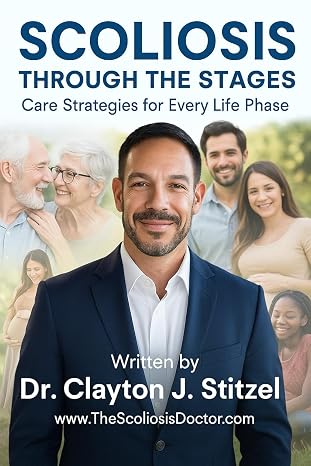
Discover hope, science, and real solutions—explore The Scoliosis Doctor series on Amazon and start transforming your scoliosis journey today! Download the Kindle app on your mobile device for free! Get it for iPhone. Get it for Android.
Conclusion
To sum up, scoliosis is not just something that shows up in the teen years. Anyone can get it, no matter their age. It is important to know how scoliosis can change from when you are young to when you get older. This will help clear up wrong ideas and make sure people can find out if they have it early, so they get help in time. The right method, like the ScoliSMART way, looks at what each age group needs. This can help people handle their adult scoliosis and feel better about the journey ahead.
If you want to read more about the care options for scoliosis through all parts of life, look at “Scoliosis Through The Stages: Care Strategies for Every Life Phase, by Clayton J. Stitzel, The Scoliosis Doctor.”
You can also check out Adult Scoliosis Boot Camp for ways to feel better without surgery by clicking Treating Scoliosis.
The more you know about adult scoliosis, the better you or someone you care about can handle it.
Frequently Asked Questions
Can adults develop scoliosis for the first time?
Yes, adults can get scoliosis for the first time. This type is known as degenerative scoliosis. It happens when the spine gets worn down with age. A scoliosis diagnosis can happen in adulthood because spinal curvature comes up slowly. It might not show signs until later years.
Are treatment options different for teenagers and adults?
Yes, treatment options are not the same for teens and adults. For teens, the aim is to stop the curve from getting worse as they grow. A doctor may suggest exercises or use a scoliosis brace for this.
For adults, the focus is more on easing pain and making life better. Help from physical therapy and other ways that do not use surgery are important. Doctors often try to help without needing a big surgical intervention, such as spinal fusion, to help with the changes in the spine and to increase quality of life.
How common is scoliosis in adults compared to younger people?
While adolescent idiopathic scoliosis affects about 2-3% of people, adult scoliosis is more common. Some studies say that as many as 68% of people over 60 in the United States have some kind of spinal curve. This is often because of types of scoliosis that come with age, which can change the spine over time.


