

Key Highlights
- Find out about lifelong scoliosis treatment options that help retrain your body’s natural reflexes.
- See how a special physical therapy and exercise program can make your quality of life better.
- Learn why finding spinal curvature early is so important for stopping it from getting worse.
- Discover how the ScoliSMART Activity Suit makes it easier to handle scoliosis in your daily life.
- Look at how a non-surgical scoliosis treatment can give you lasting results for your spinal health.
- Get ideas from long-term studies and a new book about managing scoliosis at any age.

Living with scoliosis means you are always searching for good ways to take care of your back and spine. It can feel hard to find the right scoliosis treatment, especially if you have idiopathic scoliosis. There are many traditional treatment options out there, but you need a plan that grows with you and your needs. This guide shows you new, non-surgical ways to help your body adjust for the long run. These ideas help you take charge of your health at any age, whether you are a child or an adult.
Key Principles in Lifelong Scoliosis Management
A good way to handle scoliosis for life is based on some key ideas. You need to make a treatment plan together with your care team that emphasizes early intervention. This is more than just waiting to see what happens. The aim is to stop the progression of scoliosis before it gets worse.
This new way helps you train your body’s usual way of moving so you get better posture and your spine stays straight, which is particularly beneficial for those experiencing cases of scoliosis. When you work with your body and not against it, you can see better results. Your back will feel good for years to come.

Why Early Detection Matters for Better Outcomes
Finding scoliosis symptoms early is very important. This is especially true for adolescent idiopathic scoliosis. If a doctor finds the spinal curve when it is still new, they have a better chance to help before the problem gets worse. Early detection gives the chance to use treatments that do not need surgery. These treatments can help the spine grow the right way and lower the risk of curve progression.
Your body uses its own reflexes to help control posture. If these reflexes do not work as they should, the progression of scoliosis and the curvature of the spine can happen. If treatment starts early, the reflexes can be changed and trained again. This process helps the brain and spine work together. New muscle memory forms, which can help support a straighter spine.
This way of working early can help a lot to lower the need for treatments like bracing, steroid injections, or surgery in a child later on. It helps a child have better spinal health and feel better for many years.
Understanding the ScoliSMART Approach to Scoliosis Care
The ScoliSMART approach gives you a new and active way to deal with scoliosis. This method does not use stiff braces that make it hard for you to move. Instead, it helps to train the body’s automatic postural reflexes. The link between your spinal reflexes and how you stand is important, especially in severe cases of scoliosis. When you train these reflexes the right way, your body can get better posture without much effort from you. The ScoliSMART approach makes it easy to stand up straight and feel better.
This is done by using special exercises and new tools like the ScoliSMART Activity Suit. The suit helps your body move naturally. At the same time, it gently helps your body stay in better position. The main goal is for you to keep good posture without thinking about it during any scoliosis activity, which may include considerations for decompression surgery if necessary.
The ScoliSMART approach helps you achieve:
- A straighter spine happens when you train your body to sit or stand right.
- Muscle feel better and you get more balance with practice.
- You will have better posture when you do normal things each day.
- Your body stays strong for a long time without needing hard support.

The Role of Reflexive Response Rehabilitation in Scoliosis
Reflexive response rehabilitation is a new way to help people with scoliosis. This treatment works on the reflexive response in your body. It helps to slowly train the automatic link between the brain and the spinal cord. Similar ways of rehab have worked for people who get spinal cord injury. With practice, these patients can find new ways to move.
For scoliosis, this way can help you build new muscle memory. You don’t have to always think about standing up straight. Your body gets used to doing it on its own, promoting proper posture automatically. This reflexive response can give you better posture for a long time and help your spine stay healthy. We will look at how these methods work and the science that is behind them.
Explaining Reflexive Response and Neurorehabilitation Techniques
A reflexive response in rehabilitation is your body’s fast and automatic answer to something that happens, which can also help alleviate leg pain. This can be retrained to help you stand or sit straighter. This way of neurorehabilitation uses the body’s own way of learning. It works with reflexes the body already has, like the spinal stretch reflex. The spinal stretch reflex helps your muscles keep their normal length and feel.
One key way to help reduce lower back pain and improve your posture is the operant conditioning of spinal reflexes. In this method, you get steady feedback that helps your body know when your spine is in the right spot. After some time, your brain and spinal cord learn to turn on the correct muscles. This helps you keep your spine straight without thinking much about it.
You do some movements while you get gentle feedback to help you with ergonomic adjustments. A device like the ScoliSMART Activity Suit is often used for this. You keep doing these until the new habits feel natural. Over time, you will get better posture because your body learns the new way to stand.
Scientific Evidence: Study Review on Reflexive Response Rehab
Yes, there is scientific proof that this new reflexive response method works. A key study found in the International Journal of Clinical Medicine looked at how reflexive response rehabilitation can help people in reducing curvature progression. The research shows clear proof that this way can bring big improvements.
The study called “Reflexive Response Scoliosis Rehabilitation: A Novel Approach of Operant Conditioning of a Spinal Reflex for Neuro-Rehabilitation of Scoliosis” showed some good results. People who used this reflexive response method saw a clear change in the curve of their backs. Many of them also said they had less pain. You can read the full study here.
This way of working with the body uses operant conditioning of a spinal reflex to help with scoliosis.
This research shows that it is possible to change how the body’s automatic reflexes work. This can help in treating scoliosis without surgery. The results say that this way can lead to better spine health.
Retraining Spinal Reflexes for Lasting Scoliosis Improvements
The main goal of reflexive response rehabilitation is to help your body reteach the spinal reflexes for a long time. When you work on the automatic stretch reflex and some other postural responses, you help your body learn to stay in a better, more healthy position by itself, which is especially important for those with severe scoliosis. This can give you better health and a big boost in your quality of life.
This way is not just a quick fix. It helps the brain and muscles talk to each other in a new way that lasts. Let’s see how this happens. We will also talk about exercises that can help with it as a practical first step.

Click on the Scoli-Fact to see the rest of the Scoliosis Facts!
How Reflexive Response Rehabilitation Works
Reflexive response rehabilitation is a specialized physical therapy for scoliosis that builds new muscle memory and trains low back spinal reflexes for better, automatic posture. Instead of constantly reminding yourself to stand straight, your body learns to do it naturally through targeted practice.
The process starts by identifying faulty reflex patterns causing the spinal curve. Then, specific exercises retrain your muscles and create healthier pathways between your brain and spine, promoting better spinal alignment. With repetition, these new pathways become dominant, so your muscles support a straighter spine without conscious effort. This improved muscle memory can reduce pain, enhance posture, and help prevent curve progression.
Unlike regular workouts, reflexive response rehab uses custom exercise plans tailored by a physical therapist to fit your unique spinal curve. These exercises activate underused muscle groups, including core muscles, and retrain your body’s reflexes for better automatic responses.
Your personalized program will focus on balance and coordination using safe movements designed to improve stability and reaction. Often, you’ll wear the ScoliSMART Activity Suit during sessions, which provides gentle resistance and feedback to guide correct positioning, similar to how a scoliosis brace supports proper alignment.
Common exercises include:
- Balance training on unstable surfaces
- Weight-shifting movements
- Gentle spinal rotation exercises
- Gait training for improved walking
These targeted activities help retrain your body for better posture and movement with less conscious effort.
The ScoliSMART Activity Suit: Purpose and Benefits
The ScoliSMART Activity Suit is something you wear to help support better posture if you have scoliosis. It is light and lets air through, so you can use it every day. There are straps in just the right spots to help your body improve its range of motion. The suit gives gentle and steady pull on your muscles. This helps your body get into the right place during your daily routine. If you are a scoliosis patient, you can use the scolismart activity suit to feel better in your day-to-day life.
In reflexive rehabilitation, the suit works as a steady guide to relieve chronic pain. When you move, it makes your body’s own reflexes help you stand straighter. Over time, this teaches your body to keep a better posture without thinking about it. The suit helps you build new muscle memory. Your body starts to stay in better shape even when you are not wearing it. This suit is made for an active lifestyle, so you can use it during your normal day. Treatment can fit into everything you do.
For scoliosis patients, the main benefit is that it helps you fix the problem in an active way, not by just giving support. It lets you build strength and feel more steady in your body from the inside, which is especially important for addressing mobility issues. This often leads to better results that last a long time. You can also keep being active and do the things you like in your life.

Insights from Long-Term Scoliosis Family Care Studies
Looking at real experiences from long-term studies with families gives us good ideas on how to help people with scoliosis and spinal nerves. These studies check in on people and their families over many years. They help us see how different treatments change their lives. The findings usually say that non-surgical care like chiropractic rehab leads to less pain. It can also bring a better quality of life for the people in the studies.
These follow-ups give hope and simple ways to manage scoliosis. They show that you do not have to choose spinal surgery to feel better and achieve effective pain relief. By taking regular and easy steps, people at any age can see a real change. Now, we will talk about a new nine-year study. This study tells us more about living with scoliosis and ways to manage it for life.
Nine-Year Follow-Up Review of Chiropractic Rehabilitation
A long-term review looked at a family for nine years as they had chiropractic help for scoliosis. This study shows strong proof that non-surgical ways can give good, lasting results, especially for adult scoliosis. The study found that people in the family kept their gains in spinal curvature and returned to their daily activities with less back pain long after the first round of care.
This research, called “Chiropractic Rehabilitation of a Scoliosis Family: Results from a 9-Year Follow-Up,” shows how strong a regular rehab plan can be in understanding the impact of scoliosis. You can read the full study here. This kind of long-term result makes clear that there is a way to manage scoliosis well for many years.
Key findings from the nine-year follow-up include:
- Over time, the Cobb angles, or spinal curvature, get better in a lasting way.
- People feel less back pain and don’t have as many related problems for a long time.
- A person’s posture gets better, and they move or feel better overall.
- This helps them stay away from bigger treatments like surgery.
What We Learn About Managing Scoliosis for All Ages
Long-term studies show that taking action early is important for people with scoliosis, no matter their age. If someone has scoliosis as a child, or gets degenerative scoliosis when older, focusing on rehabilitation and options like spinal fusion can bring real changes. These treatment options can help, so you do not have to just watch the curve get worse or quickly think about surgery.
Reflexive response therapy can be a good way to help adults who have scoliosis, including those with degenerative (de novo) scoliosis. Many adults feel pain and stiffness because of old curves in their back or from changes that happen as they get older. This therapy works by teaching the body how to control posture in a more automatic way. It can lower pain, help you move better, and make the quality of life better, even if you have lived with scoliosis for many years.
The main thing to remember is that it is not too late to look for better treatment options. A way that includes manual therapy can help your body learn new reflexes and can give you real benefits. This can help you feel more in control of your spine and health, no matter how old you are.
Scoliosis Through the Stages: Book Highlights
Knowing how to handle the different stages of scoliosis is important for staying healthy through life. A new book gives helpful advice on this. It talks about scoliosis in kids, adult scoliosis, and the problems people may face due to degenerative changes as they get older. The book shares tips and ways you can deal with each stage.
This resource is here to help you feel sure as you go through your journey toward effective pain management. You will get clear tips you can use every day. Let’s look at what you need to know and some easy ways to help deal with scoliosis for people of any age.
Key Takeaways from “Scoliosis Through The Stages” by Clayton J. Stitzel
In his book, “Scoliosis Through The Stages: Care Strategies for Every Life Phase,” Dr. Clayton J. Stitzel gives a clear and helpful guide for people who have scoliosis and experience scoliosis pain. This book review talks about the good, simple tips Dr. Stitzel shares on how to help with scoliosis progression. He focuses on scoliosis treatment that does not need surgery. Dr. Stitzel is a ScoliSMART doctor. He talks a lot about helping the body learn new ways to move. This goes well with tools made for neurorehabilitation.
The book takes hard topics and makes them simple. It gives you clear tips for every stage of life. This book can help you play a big part in your own health. You can find the book here
Key takeaways from the book include:
- It is important to help kids early, so the curve does not get worse through regular monitoring.
- There are ways for adults to help with pain and keep an active lifestyle.
- You can follow tips on what to eat and which supplements are good for maintaining a healthy weight for your spine.
- There are clear steps you can take to stop problems related to scoliosis as you get older.
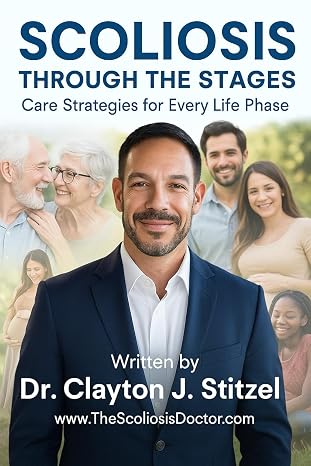
Discover hope, science, and real solutions—explore The Scoliosis Doctor series on Amazon and start transforming your scoliosis journey today! Download the Kindle app on your mobile device for free! Get it for iPhone. Get it for Android.
Strategies for Scoliosis Management in Childhood, Adulthood, and Aging
How to manage scoliosis depends on your age and stage in life. When you are a child, it is important to stop the spinal deformity from getting worse. To do this, doctors may suggest special exercises, like the ones used in reflexive response. Eating the right foods can also help a child grow in a healthy way. These steps try to keep you healthy and lower the chance that you will need scoliosis surgery or other surgical treatments later.
As an adult, the goal is to manage pain, keep moving, and do daily tasks in a simple way. You can help with this by staying with a good exercise program that includes strength training. This will keep your muscles strong and even. It also helps to use things like the ScoliSMART Activity Suit. You should also watch how you sit and move at home and at work to make things better.
In the aging population, people work to stop falls and fight stiffness from degenerative scoliosis. They do gentle exercises. This helps keep balance and stay flexible. They also use special supplements for bone health and joint health. A proactive approach at any age is needed for a good quality of life.
Conclusion
To sum up, taking care of adolescent scoliosis well needs more than one method. This grows and changes over time in a person’s life. It is good to start by finding the problem early. It also helps to know about new rehab methods like reflexive response rehabilitation. Using special tools can also make a big difference for people with scoliosis. What we learn from looking at people for many years shows that you have to keep caring for yourself. It also shows that new tech can help with rehab work.
If you want to learn more about how to take care of scoliosis, read “Scoliosis Through The Stages: Care Strategies for Every Life Phase” by Clayton J. Stitzel. This book gives advice for each part of your life. If you want research about rehab, see the studies linked above.
Put your health and well-being first. This can make living with scoliosis easier and better for you.
Frequently Asked Questions
Is reflexive response rehabilitation effective for adult scoliosis?
Yes, this works very well for adult scoliosis. The reflexive response way can teach muscles what to do, which helps cut down on pain and lets you stand or sit better. If you want treatment options that address muscle imbalance and are not surgery, you may get better results and feel a big change in your quality of life. It helps your spine feel strong again and lets it move the right way.
How does the ScoliSMART Activity Suit work for scoliosis patients?
The ScoliSMART Activity Suit helps people with scoliosis improve their posture by giving gentle resistance during their daily routine. It helps the muscles learn the right way to move through a regular exercise program. This makes it a good fit for anyone with an active lifestyle. The suit teaches the body to fix its alignment on its own.
Can modifying spinal reflexes slow down scoliosis progression?
Yes, using physical therapy to change how spinal reflexes work can help to slow scoliosis progression and prevent spinal stenosis. When you practice working with the stretch reflex and other ways the body holds its posture, it starts to keep a straighter spine by itself. This early and hands-on method is a good way to stop problems from getting worse, especially if you start soon.


